Get the ePadosi App
Faster experience on iOS



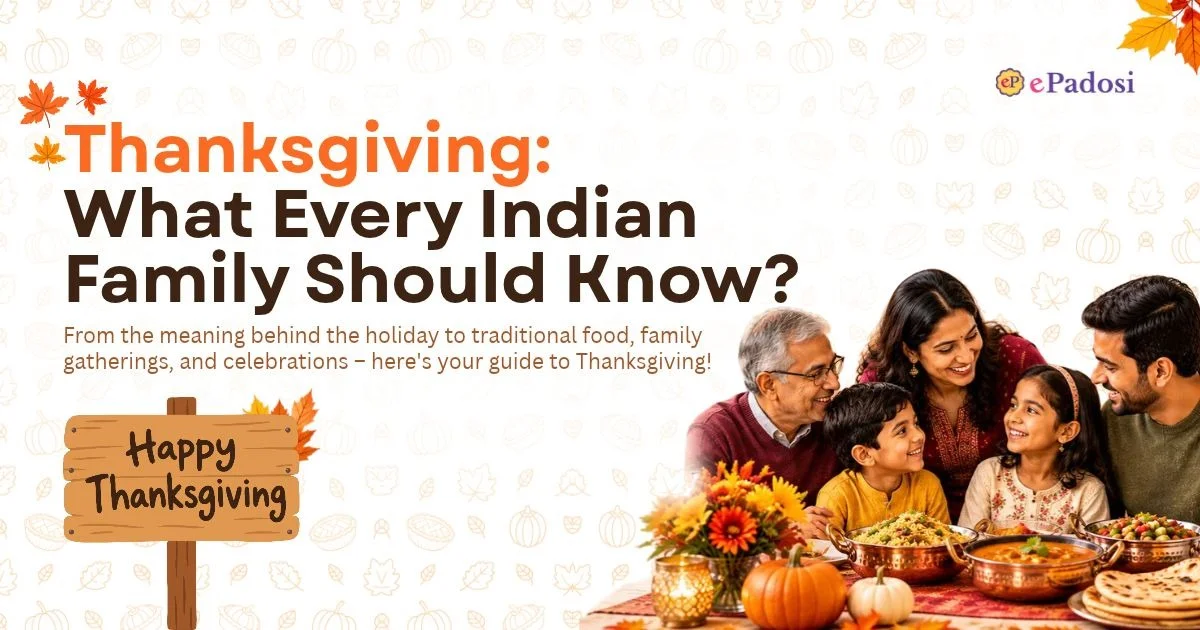
You have celebrated Thanksgiving for years. The turkey, the gratitude, the long weekend. But the story you were told in school was only one version. And it was not the whole truth.
For immigrant families, learning the full story changes how we see the holiday. It does not take away the gratitude. It deepens it.
Here is what every Indian family should know before the next Thanksgiving.
The Thanksgiving story most of us learned is a simplified myth. The reality is more complex, and it involves people who had been giving thanks long before the Pilgrims arrived.
The Wampanoag people practiced daily and seasonal traditions of giving thanks long before English settlers arrived. Gratitude was not a single feast for them. It was a way of life, tied to the land, the harvest, and the Creator.
The 1621 gathering did happen. But the Wampanoag were not invited guests at a friendly dinner. They arrived, likely drawn by the gunfire, and contributed food.
The "First Thanksgiving" story emerged as a myth in the mid-1800s. Abraham Lincoln declared the holiday in 1863, during the Civil War. The narrative of friendly Pilgrims and helpful Indians served a political purpose. It made the taking of land feel peaceful.
For many Native people, the holiday is a National Day of Mourning, not a celebration. That observance began in 1970 in Plymouth. It is not bitter. It is honesty.
Native Californians do not all see Thanksgiving the same way. Their views range from quiet family gratitude to open grief about what the holiday represents. Holding both helps us observe the day with more awareness.
Family and gratitude come first. Many see it as a good reason to gather, be humble, and share a meal.
Honoring ancestors and culture. For some, the day is about thanking elders and passing down traditions.
A day of survival and togetherness. Many families focus on gratitude for their survival.
These are not contradictory views. They sit together. A person can love the gathering and still grieve the history.
We adopt American holidays quickly. We learn the food and the routines. We rarely learn the full context behind them.
That gap is worth closing. Knowing the Native perspective helps us celebrate with honesty and respect.
It helps us avoid repeating a myth that erases an entire people's history. Our children hear the sanitized version at school. We can fill in the rest at home.
It teaches our children the full story, not just the storybook version. Many Native families make a point of passing the real history to their children. We can do the same.
It connects us to the original inhabitants of this land. We are guests here. Knowing our hosts matters.
It also echoes something familiar. Gratitude before a meal is not new to Indian families. We already bow our heads before we eat.
You do not have to skip the holiday. You can observe it with a deeper understanding and a grateful heart.
Share the true history with your family before the meal. A five-minute conversation before the prayer is enough. Children understand more than we think.
Acknowledge the land and its original caretakers during your blessing. You do not need a formal script.
Focus on gratitude for what you have, just as Native traditions do. The core of the day is thankfulness. That part belongs to everyone.
Blend traditions by adding your own Indian dishes to the table. Your biryani, your paneer, your sweets. Nobody says you have to serve turkey.
Finding community and local events can make any holiday feel more meaningful.
ePadosi is a desi community platform in the Bay Area that lists gatherings and events across the region.
1. How do Native Americans observe Thanksgiving today?
Observances vary widely. Some mark it as a National Day of Mourning. Others gather with family for a meal and give thanks to the Creator.
2. What can Indian families serve at Thanksgiving?
Serve your usual Indian dishes alongside one or two American classics. The meal does not need to follow any fixed menu.
3. How can I explain the Native perspective to my children?
Keep it simple and honest. Tell them the Wampanoag were already giving thanks long before the Pilgrims arrived.
4. What does "National Day of Mourning" mean?
It is a day observed by many Native people to honor ancestors and acknowledge the painful history of colonization. It is not a protest against gratitude.
Thanksgiving can hold more than one truth at once. Gratitude for what we have. Honesty about what came before. You do not have to choose between celebrating and understanding. You can do both. Share the real story with your children. Acknowledge the land. Give thanks with a full heart.