


When you go for a walk at Pepperwood, you can’t help but be captivated by the stunning landscape—rolling hills, golden grasslands, and majestic oak woodlands create a scene that feels like it’s straight out of a storybook. The area features montane ponds and cool, mature forest ecosystems with seasonal creeks, providing essential climate refugia that support a vibrant array of biodiversity. But beneath this serene surface lies a dynamic, complex network of fault lines, a powerful reminder of the intricate, often hidden relationships between geology and ecology that shape our world. By studying these forces, we gain valuable insights into potential risks and learn to appreciate the delicate balance of life sustained in this beautiful environment.
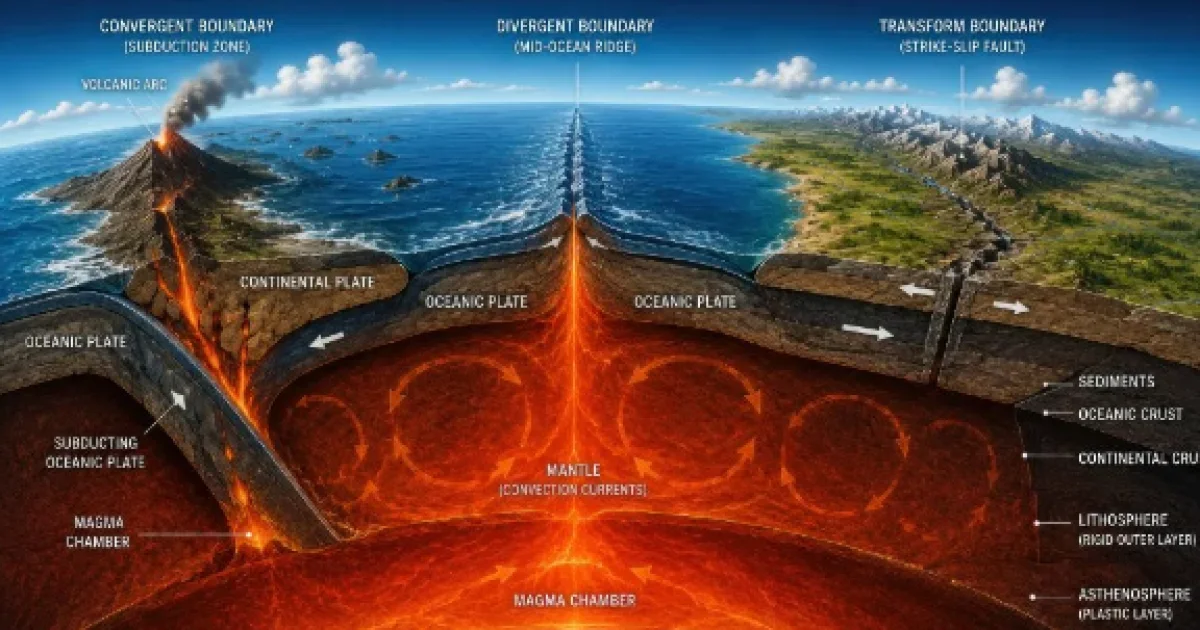
Faults are cracks in the Earth’s crust where movement occurs. Tectonic forces are the powerful movements and stresses driven by heat from the Earth’s core that build, bend, crack, and lift the planet’s crust. These forces can release immense energy, leading to earthquakes, volcanic eruptions, and even tsunamis. While we may view Pepperwood as an idyllic location, scientists know that these below-surface forces are always in play and can significantly impact our environment. By investigating these faults, researchers can assess earthquake risks, guide infrastructure planning, and deepen our understanding of the geological processes that shape our world.
From an ecological standpoint, tectonic movements along these faults are not just geological events—they are vital to creating diverse landscapes, driving microclimates (small, specific areas with weather conditions —such as temperature, wind, and moisture — that differ from the surrounding region), and controlling long-term erosion. Fractures in the rock allow deep groundwater to rise, giving birth to natural springs and oases in arid areas that help sustain rich ecosystems. Moreover, the vertical and horizontal movements along these faults can uplift mountains and carve deep valleys, resulting in diverse topography. This variety generates unique microclimates and soil types that promote a rich tapestry of species to coexist and thrive, thereby driving evolutionary adaptation.