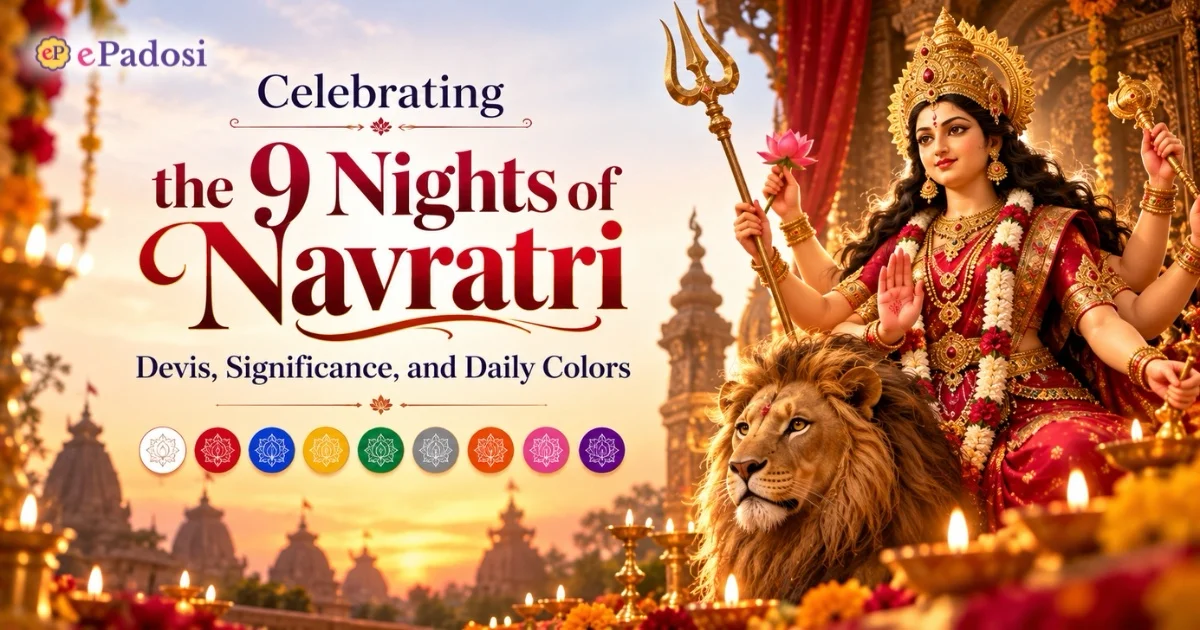
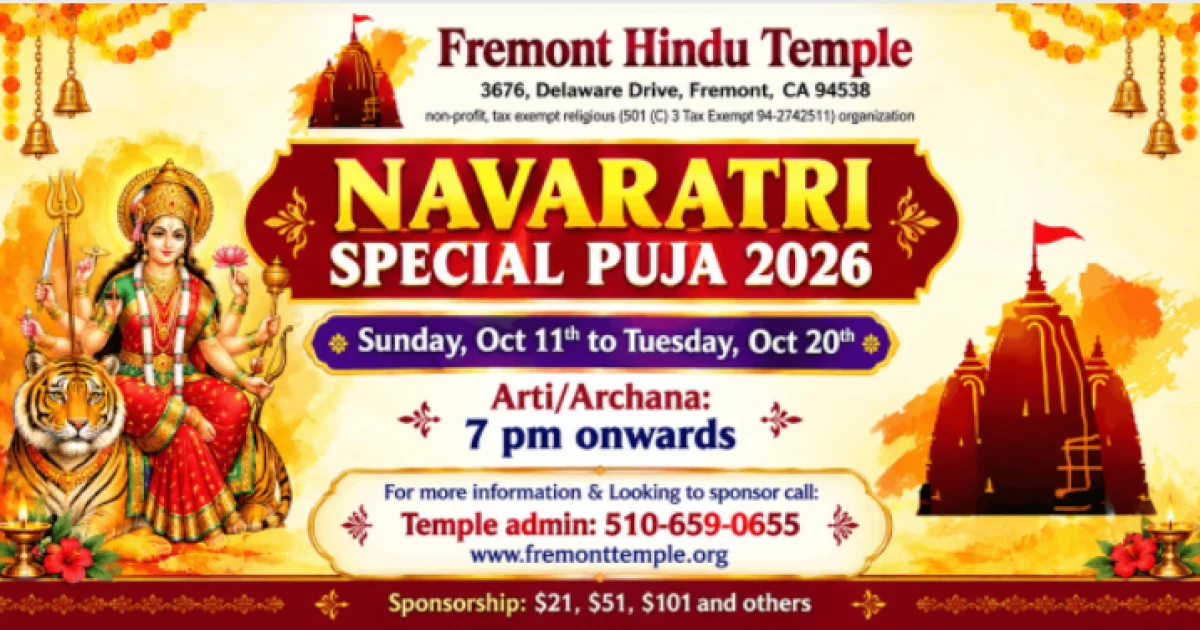
Navratri marks one of the most vibrant, spiritually uplifting periods of the Hindu calendar. Celebrated across neighborhoods and communities, these nine nights honor the divine feminine energy—Goddess Durga—in her nine distinct manifestations, known collectively as the Navadurga.
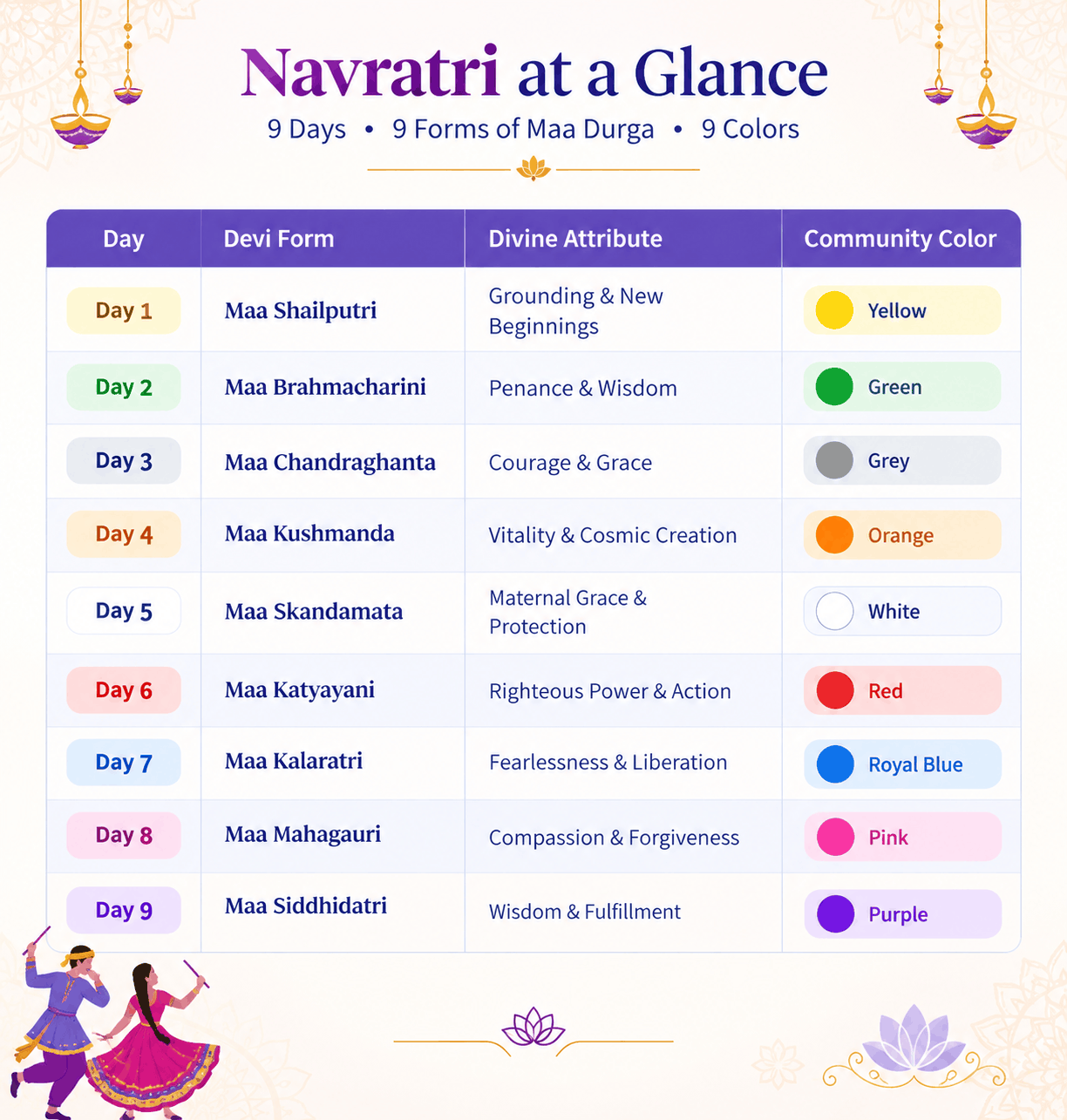
Each day carries a dedicated spiritual significance, a presiding deity, and an associated traditional color. Wearing each day's color brings neighborhood communities together in festive harmony.
Day 1: Ghatasthapana & Maa Shailputri
- Presiding Deity: Maa Shailputri ("Daughter of the Mountain")
- Color of the Day: Yellow
- Significance: Embodying nature, strength, and grounding energy, Maa Shailputri is depicted riding a bull (Nandi) with a trident in one hand and a lotus in the other.
- Community Spirit: The first day begins with Ghatasthapana (Kalash Sthapana) in homes and community pandals. The bright yellow attire represents warmth, optimism, and an auspicious beginning.
Day 2: Tapasya & Maa Brahmacharini
- Presiding Deity: Maa Brahmacharini ("The Ascetic Goddess")
- Color of the Day: Green
- Significance: Walking barefoot with a rosary (rudraksha japa mala) and a water pot (kamandalu), she symbolizes penance, patience, wisdom, and inner calm.
- Community Spirit: Green reflects nature, renewal, tranquility, and growth. It serves as a reminder to cultivate patience and quiet dedication in our daily lives.
Day 3: Courage & Maa Chandraghanta
- Presiding Deity: Maa Chandraghanta ("The Crescent Moon Bearer")
- Color of the Day: Grey
- Significance: Adorned with a bell-shaped half-moon on her forehead and riding a ferocious tiger, she is fierce toward negative forces yet deeply benevolent toward her devotees.
- Community Spirit: Grey represents balanced strength, resilience, and quiet determination. It reminds us that grace and courage go hand in hand when overcoming hurdles.
Day 4: Creation & Maa Kushmanda
- Presiding Deity: Maa Kushmanda ("The Cosmic Creator")
- Color of the Day: Orange
- Significance: Credited with creating the universe with her radiant smile (Ku-Ushma-Anda), she illuminates the entire cosmos with her solar radiance while riding a lioness.
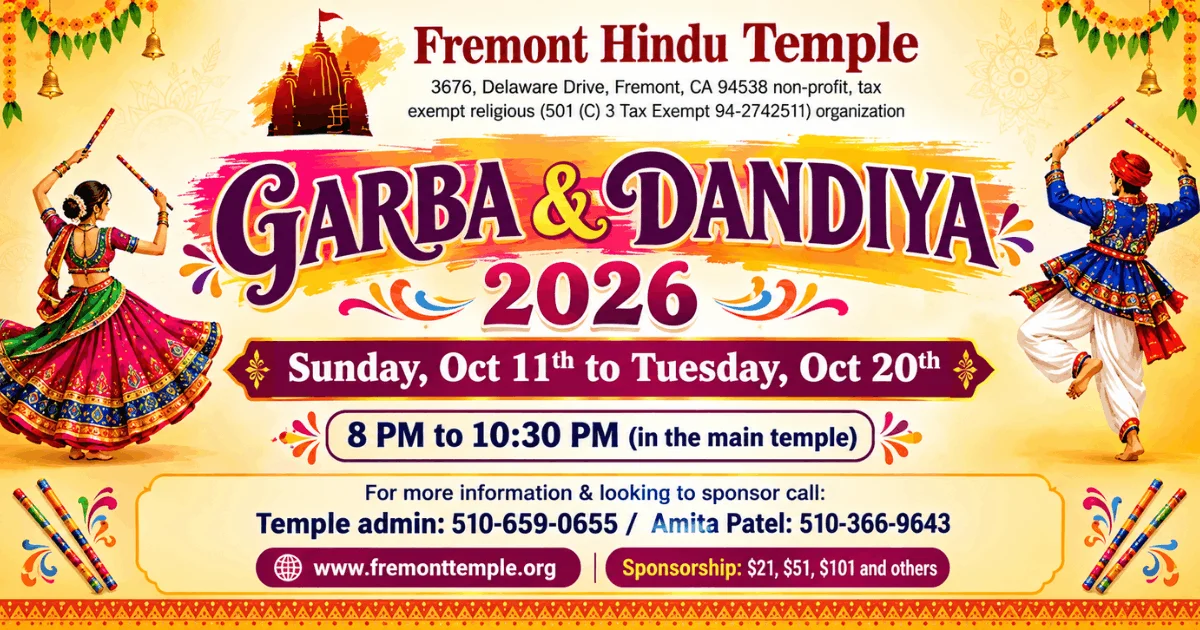
- Community Spirit: Vibrant orange radiates energy, enthusiasm, and joy. It is the perfect shade as neighborhood evening Dandiya and Garba rehearsals kick into full gear.
Day 5: Maternal Protection & Maa Skandamata
- Presiding Deity: Maa Skandamata ("Mother of Lord Skanda / Kartikeya")
- Color of the Day: White
- Significance: Seated on a lotus holding the infant warrior deity Skanda, she embodies fierce maternal instinct, purity, and unconditional love.
- Community Spirit: White symbolizes peace, clarity, and harmony. Communities often gather on this day for afternoon bhajans and peaceful collective prayers.
Day 6: Valor & Maa Katyayani
- Presiding Deity: Maa Katyayani ("The Warrior Destroyer of Mahishasura")
- Color of the Day: Red
- Significance: Born from the combined wrath of the gods to eliminate the demon king Mahishasura, she represents active justice, valor, and righteous anger against injustice.
- Community Spirit: Bold red conveys passion, devotion, and vigor. As the festival reaches its halfway mark, temples and pandals brim with dynamic evening aartis.
Day 7: Liberation & Maa Kalaratri
- Presiding Deity: Maa Kalaratri ("The Destroyer of Darkness")
- Color of the Day: Royal Blue
- Significance: Dark as the midnight sky, with wild hair and a fearless stance, she destroys ignorance, fear, and negativity. Though fierce in form, she is also called Shubhankari because she bestows immense auspiciousness.
- Community Spirit: Royal Blue represents vastness, depth, and unwavering authority over fear. It inspires trust and security within the neighborhood.
Day 8: Grace & Maa Mahagauri
- Presiding Deity: Maa Mahagauri ("The Serene & Luminous")
- Color of the Day: Pink
- Significance: Epitomizing extreme purity, calm, and beauty, Maa Mahagauri blesses devotees with forgiveness, relief from past burdens, and peaceful reconciliation.
- Community Spirit: Soft pink reflects compassion, kindness, and neighborly warmth. Many families observe Kanya Pujan on this day, honoring young girls as living embodiments of the Devi.
Day 9: Fulfillment & Maa Siddhidatri
- Presiding Deity: Maa Siddhidatri ("The Giver of Perfections and Boons")
- Color of the Day: Purple
- Significance: Bestower of all supernatural powers (siddhis) and spiritual fulfillment, she sits peacefully on a blooming lotus, revered by gods, ascetics, and seekers alike.
- Community Spirit: Purple represents grandeur, wisdom, and celebration. On the final day of Navratri, societies culminate their celebrations with Havan, grand feasts, and heartfelt community Maha-Prasad.
Conclusion
The nine nights of Navratri carry deep meaning. Each Devi brings a unique blessing. Each color adds joy to the celebration.
But finding the right event takes effort. You check many websites. You scroll through endless messages. You still miss the best nights.
ePadosi makes it simple. It helps Indians living in the Bay Area find event schedules and local information. Garba nights, temple programs, and festive gatherings — all in one place.
Visit ePadosi, check the schedule. Wear your colors. Join the celebration.